A carrier says delivered. Purchasing assumes the labeling job is ready. The co-packer may have received sealed cartons without checking the artwork revision, component quantities or roll condition needed for the scheduled run.
Agree three distinct confirmations: shipment identity, receiving condition and authorization to use the stock. This handoff lets the relevant people resolve a discrepancy before it appears beside the filling line.
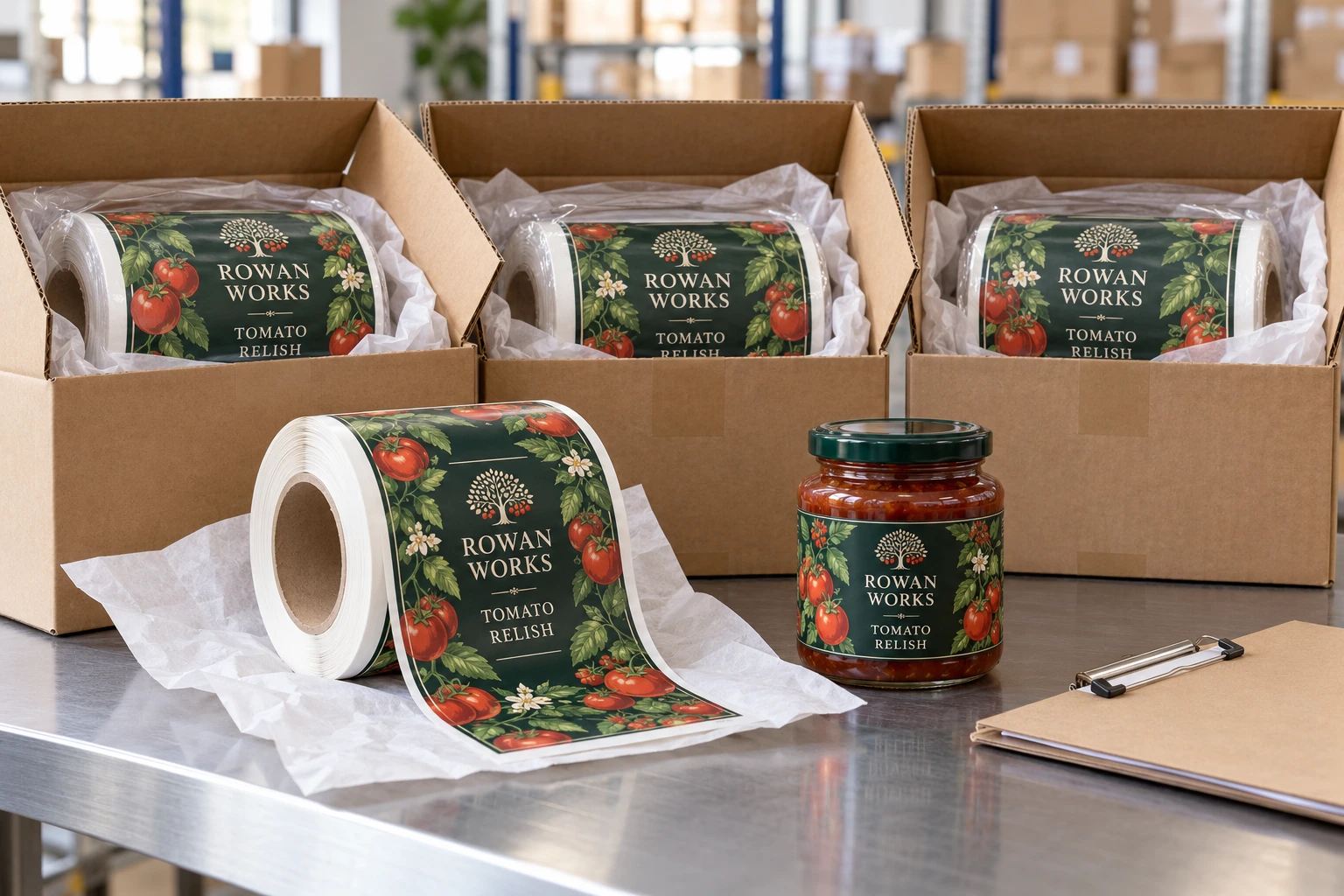
AI-generated packaging planning example. Rowan Works is a fictional brand; not a customer project, production test or usable retail artwork.
Put the expected contents in the dispatch record
Before shipment, align the label supplier, purchaser and receiving contact on what is being sent. Include SKU/component, artwork revision, quantity basis, roll/carton identity and delivery destination. Record any separately shipped trial material so it cannot be confused with ordinary production stock.
| Handoff | Evidence or decision | Named responsible party |
|---|---|---|
| Dispatch | Packing record and confirmed specification references | Supplier shipment owner |
| Physical receipt | Carton identity, quantity basis and visible condition | Co-packer receiving contact |
| Discrepancy hold | Affected stock isolated and evidence preserved | Site stock/quality owner |
| Readiness review | Correct revision, required components and format available | Production coordinator |
| Use authorization | First-off and unresolved exceptions addressed | Authorized line/quality reviewer |
The job titles vary by business. The important part is that every unresolved item has a contact and a recorded decision. Receiving a carton should not silently authorize a substitution or waive a technical requirement.
Escalate a specific discrepancy
If a carton mark and the packing list disagree, identify the affected carton before relabeling it. If a roll is damaged, retain the condition photographs and identity before unwinding. If the supplied revision is wrong, keep it segregated rather than asking the operator to remember not to use it.
Record who needs to respond, what evidence is available and which production requirement is affected. A general message saying labels are bad does not distinguish a counting question from a machine-format or artwork problem. Keep the confirmed stock available for review without implying that partial receipt permits an incomplete product set.
Confirm readiness against the scheduled job
The co-packer may hold stock for several products or customers. The relevant check matches the intended work order to the authorized label components and available usable quantities. A sample roll accepted for a trial is not automatically the bulk shipment reference if the construction or format changed afterward.
For roll dimensions, use the equipment record; for leading edge and station, use the agreed drawing; for front/back pairing, use the component set. Keep those references with the release record rather than copying them into disconnected emails.
Close the exception visibly
When a correction or replacement arrives, link it to the original affected stock and record the disposition. Do not close the issue merely because a new parcel has been sent. Confirm whether the replacement has been received and assessed under the same relevant requirements. The parties should separately agree any commercial remedy; this guide does not determine fault or compensation.
Short answer
Before sending labels to a co-packer, confirm label size, material, roll direction, core size, label gap, quantity per SKU, carton labels, delivery address and approved artwork. These details help the labels arrive ready for the packaging line, not just visually correct.
Co-packer label checklist
| Detail | What to confirm | Why it matters |
|---|---|---|
| Label size | Width, height, shape and corner radius. | Fits the bottle, jar, can, pouch or container. |
| Roll direction | Top-first, bottom-first, left-first or right-first. | Matches dispenser or labeling machine feed. |
| Core size | Inner roll core required by the co-packer. | Rolls must mount on the machine. |
| Label gap | Space between labels on the roll. | Affects machine sensor reading and application. |
| Quantity | Labels per SKU plus extra for setup and waste. | Prevents short shipment during production. |
| Carton packing | SKU labels, carton counts and shipping marks. | Helps the co-packer identify rolls quickly. |
Ask for machine details early
Some co-packers hand apply labels, while others use dispensers, semi-automatic labelers or production lines. Each setup may need different roll direction, core size and maximum roll diameter. A short machine photo or requirement sheet can prevent expensive rewinding or repacking later.
Plan SKU counts and extra labels
Food and beverage brands often print several flavors or seasonal designs. Count labels by SKU, not only by total order quantity. Co-packers may also need extra labels for setup, damaged containers, line checks and retained samples. Confirm this before placing the order.
What to send with a co-packer label quote
| Field | Requirement to confirm |
|---|---|
| Package details | Container type, photos, label area and storage condition. |
| Line details | Machine model, roll direction, core size and gap when known. |
| SKU plan | Quantity per design, reorder timing and packing preference. |
| Artwork | Approved PDF or AI files with final copy and barcode. |
Related guides
Review label roll direction, prepare files with the artwork setup guide, and use the MOQ guide when planning test runs before co-packer production.
Keep production scheduling tied to confirmed readiness
A planned filling date is useful context for the supplier, but it does not resolve a missing technical approval or an unreceived component. Record which readiness item is outstanding and who can close it. If the schedule changes, update the same record so warehouse staff and production use the same status rather than different email histories.
Send the relevant project details
Prepare a co-packer label supply inquiry with package and label specifications, quantities by component, line requirements and named receiving contacts. Include the proposed handoff record and unresolved format questions. The form opens an email draft; use listed email or WhatsApp for files. Shipping arrangements and confirmed delivery terms require project review.