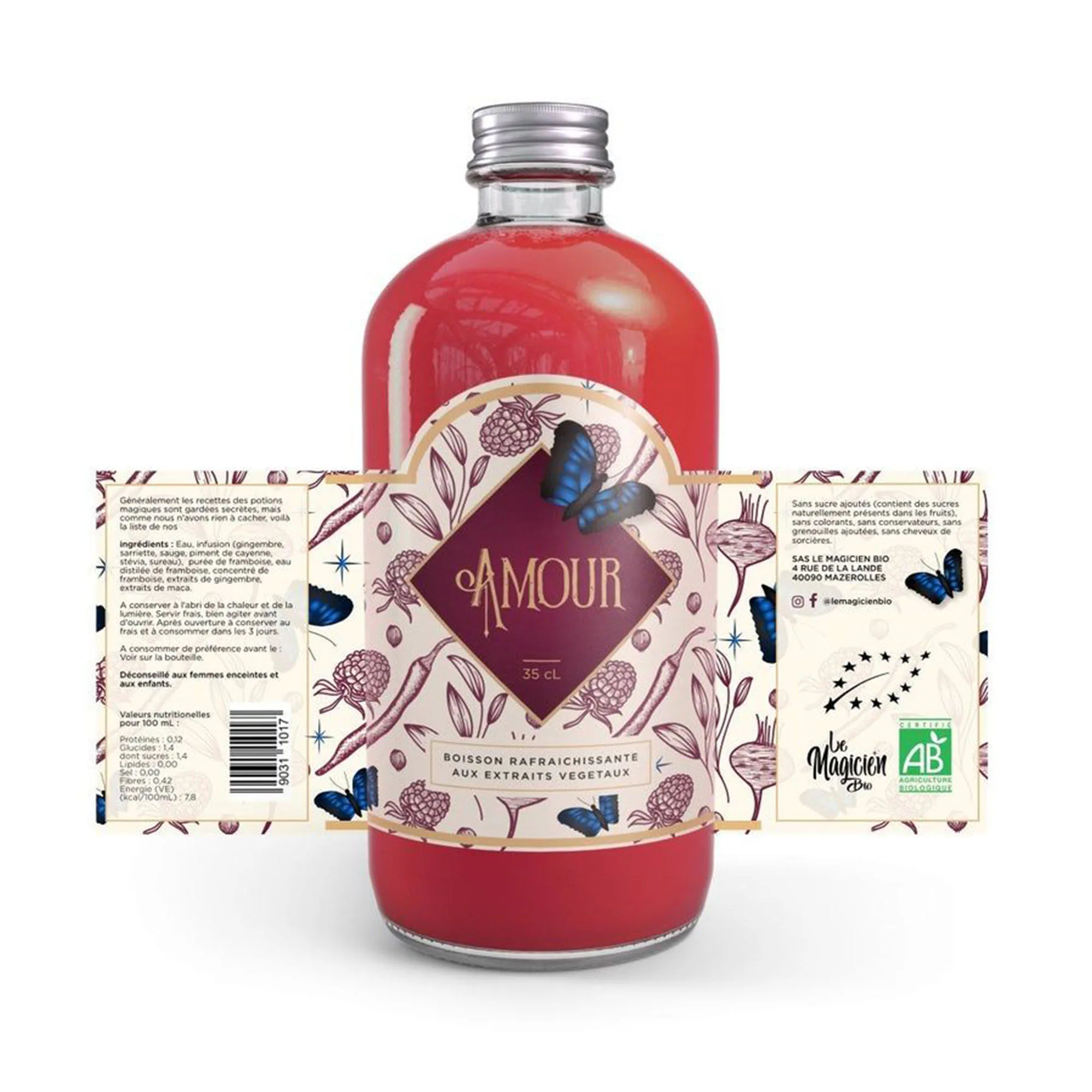
Short answer
Choose front and back labels when you want clear branding on the front and readable details on the back. Choose a wraparound label when you want one continuous design, more surface coverage or a single label application workflow.
Front/back labels vs wraparound labels
| Decision point | Front and back labels | Wraparound labels |
|---|---|---|
| Best use | Wine bottles, sauces, jars, beverages and products with separate information panels. | Beverage bottles, cans, jars and products that need full visual coverage. |
| Branding | Front label can stay clean and premium. | One continuous design can feel bold and retail-ready. |
| Information space | Back label can hold ingredients, barcode, nutrition area and storage text. | All information must fit into one longer layout. |
| Application | Two labels may need more alignment control. | One label application, but width and wrap gap must be accurate. |
| Container risk | Can avoid curves by placing labels only on stable panels. | May wrinkle or lift if it crosses curves, seams or tapered areas. |
| Machine setup | Needs spacing and order planning for paired labels. | Needs roll direction, gap and accurate wrap width. |
When front and back labels work better
Front and back labels are useful when the product needs a clean main display and a separate information area. Wine, sauce, honey, jam, juice and specialty food packaging often uses this approach because branding, ingredients and barcode do not need to fight for the same visual space.
When wraparound labels work better
Wraparound labels can create a strong shelf presence and cover more of the container. They are often considered for beverage bottles, cans, health shots and simple cylindrical jars. The measurement has to be accurate because a label that is too wide can overlap poorly, while a label that is too narrow can leave an unwanted gap.
What to confirm before choosing the format
Roll labels can support either format
Both front/back label sets and wraparound labels can be produced as roll labels. For machines, confirm roll direction, core size, label gap and whether front and back labels should alternate on one roll or be supplied as separate rolls.
Related guides
Start with the custom label size guide, then check label roll direction if your labels will run through a dispenser or machine.
FAQ
Can front and back labels be different sizes?
Yes. The front label can be larger for branding while the back label can be sized for information, barcode and compliance text.
Do wraparound labels need overlap?
Some designs may allow a small overlap or planned gap, but it depends on material, artwork, application method and container shape.
Which format is better for premium wine labels?
Many premium wine projects use front and back labels because it separates presentation from required information, but the best format depends on bottle shape and brand style.
Continue with Wraparound Bottle Labels: Plan the Seam, Gap and Overlap for a focused purchase checklist.