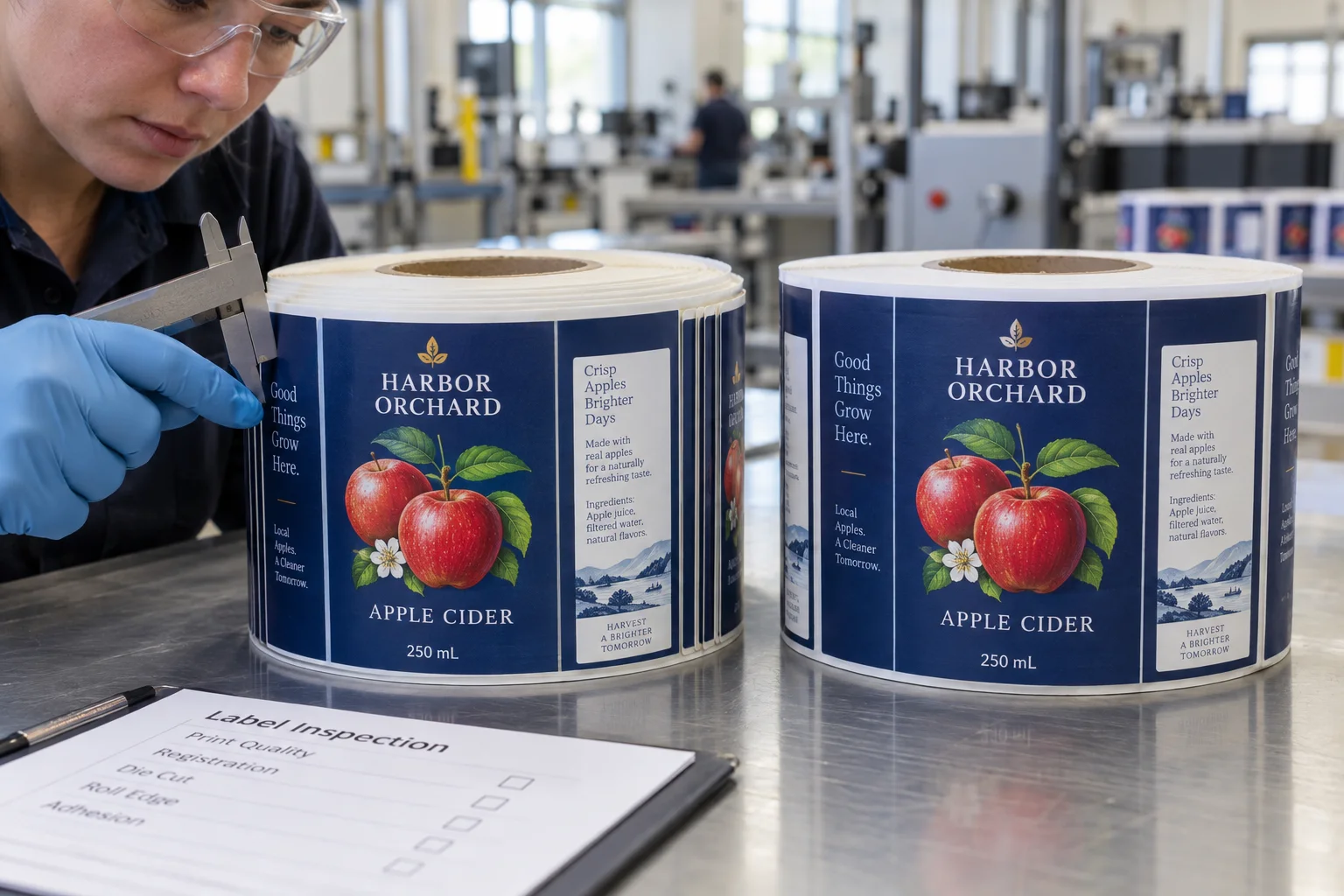
The edge tells you something the print face cannot
A telescoped roll has layers displaced sideways around its core. From the front, the artwork may look perfect. From the side, it resembles a stepped cone. My first buying question is not whether the label still looks saleable; it is whether the roll will unwind consistently without damaging the web or interrupting the line.
Dover Flexo Electronics describes telescoping as a winding defect in which layers shift laterally, and explains why web tension matters. That is a mechanism to investigate, not proof that every displaced roll was wound badly. Handling after winding also deserves review.
Two receiving docks, two different decisions
Imagine a composite cider buyer receiving a small order for hand application. One roll has a slightly uneven edge, yet labels peel cleanly and remain protected. The buyer may ask the supplier to assess the roll and document a controlled trial. Now put the same delivery on a high-speed bottling line scheduled for the morning. A small alignment change that creates a stop can cost more than the roll. I would isolate suspect rolls while checking unaffected stock.
Neither buyer benefits from a blanket rule that every uneven edge is scrap. Neither should be told to accept a roll because the print itself passed inspection. The agreed application process determines the risk.
Make a receiving record before unwinding
| Evidence | What it helps distinguish | Action |
|---|---|---|
| Unopened roll and carton photos | Arrival condition versus later handling | Include every carton side and core label |
| Core and roll edges | Core movement, stepped layers or crushed sides | Photograph both faces of several rolls |
| Lot and pallet position | Isolated damage versus shipment pattern | Keep affected and unaffected roll IDs |
| Controlled unwind trial | Appearance versus actual dispensing behavior | Record setup, speed and web tracking |
Do not push displaced layers back into place before photographing them. It destroys evidence and may hide an underlying tight or loose band. If the core is damaged or the roll is unstable, defer the trial and contact the supplier.
What to ask the converter, shipper and line team
Ask the converter for finished-roll inspection notes, winding direction, core specification and the construction supplied. Ask the warehouse about stacking, temperature and time in storage. Ask the carrier for any visible carton damage. Finally, compare a sound roll from the same lot on the intended applicator. These are parallel checks, not a search for someone to blame first.
Avery Dennison's tension-control guidance explains that too much or too little tension can produce different roll issues. I would not copy a tension setting from an article into a purchase specification: the converter must set it for the actual stock, roll diameter and equipment.
Our buying view
Specify the roll as a machine component
The easy mistake is to approve color, finish and dimensions while leaving the roll itself undefined. I would include core size, maximum outside diameter, unwind direction, roll count, packaging and agreed receiving criteria in the purchase order. A beautifully printed label that the line cannot feed is not a completed purchase.
A concise claim and reorder brief
- Send photos before handling the roll, with carton and roll IDs visible.
- State the applicator model, web path and the first symptom observed.
- Keep representative sound and affected rolls for comparison.
- Agree who will inspect winding, shipment and storage evidence.
- Confirm replacement roll dimensions and packaging before dispatch.
If the trouble is at a join rather than the roll body, see our roll splice acceptance guide. If the roll is sound but the web breaks during application, start with die-cut and liner damage.
Frequently asked questions
Can a telescoped roll still be used?
That depends on the degree of displacement and the applicator requirements. Quarantine a badly displaced roll and ask the converter and equipment supplier to assess it before use.
Does telescoping prove the printer wound the roll incorrectly?
No. Winding tension can contribute, but transport shock, core support and storage conditions can also matter. Compare unopened rolls and delivery records before assigning a cause.
Should I tighten the applicator to hold the roll together?
Do not use machine adjustments to conceal a suspect roll. Follow the equipment maker's instructions and agree a run trial only after the stock has been assessed.
Related buyer guides
Review your label specification
Send package photos, label dimensions, material details, quantity and application conditions. Include good and failed samples where possible so the discussion starts with evidence.