Short answer
Paper labels are usually a good fit for dry, indoor, shelf-stable food packaging where a warm or textured look matters. Film labels such as BOPP or PET are better when the package may face moisture, oil, refrigeration, flexible packaging, clear surfaces or frequent handling.
Paper labels: best use cases
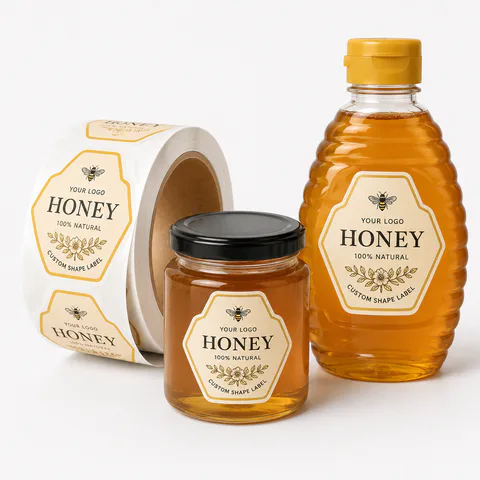
Paper labels can make food packaging feel natural, craft or premium. They are commonly used for dry jars, bakery boxes, spice containers, honey jars, pantry goods and indoor retail packs.
- Dry food jars, pantry products and spice packaging.
- Bakery boxes, paper bags and gift food packaging.
- Premium designs that need texture or a softer printed surface.
- Short-run food labels where a natural look matters more than wet resistance.
Film labels: best use cases
Film labels are often selected when packaging is exposed to moisture, oil, refrigeration or repeated handling. White BOPP, clear BOPP and PET are common options for food and beverage packaging because they can hold up better than standard paper in demanding environments.
- Sauce bottles, dressing jars and oily food packaging.
- Refrigerated, frozen or condensation-prone food packs.
- Clear containers where a transparent label effect is needed.
- Pouches and curved containers where flexibility and adhesion matter.
Paper vs film labels comparison
| Decision point | Paper labels | Film labels |
|---|---|---|
| Look | Natural, textured, craft or premium. | Clean, durable, glossy, clear or high-color. |
| Moisture | Better for dry environments. | Better for wet, chilled or condensation use. |
| Oil exposure | Needs careful review and finish selection. | Often safer for sauces and oily products. |
| Clear packaging | Opaque paper look. | Clear film can create a no-label-look effect. |
| Application | Good for boxes, jars and hand application. | Good for roll labels, bottles, pouches and machine use. |
What to send before choosing material
Related guides
For wet packaging, read waterproof beverage labels. For chilled food, review refrigerated food label materials. For a closer film comparison, see clear BOPP vs white BOPP labels.
FAQ
Can film labels look premium?
Yes. Film labels can use matte, gloss or clear finishes and can be designed for a clean premium look, especially on bottles and transparent packaging.
Are paper labels cheaper than film labels?
Paper can be economical in many dry applications, but final pricing depends on size, quantity, finish, die-cut shape and packing format.
Can I use paper labels on refrigerated food?
Sometimes, but it needs review. Moisture, condensation and adhesive performance can make film a safer choice for cold storage.