Short answer
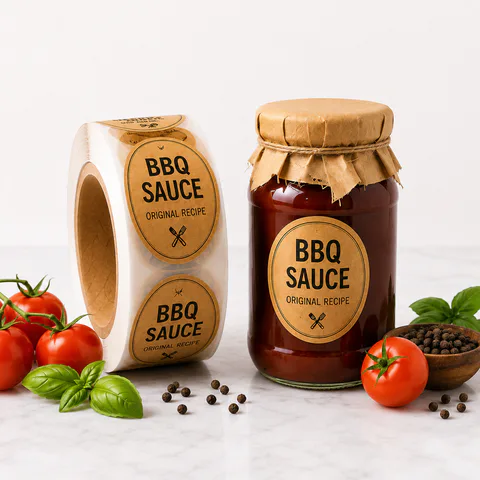
For oily sauce bottles and condiment jars, film labels such as BOPP or PET are usually safer than standard paper. The label also needs an adhesive matched to the bottle surface, a finish that protects the print, and enough edge clearance so oil or condensation does not start lifting the label.
Why sauce labels fail
Sauce packaging is harder than many dry food packages because the label may face several stress points at the same time. Oil can move across the bottle surface, refrigeration can add condensation, and curved glass or PET bottles can pull at label edges.
- Oil residue near the label area before application.
- Cold storage or wet handling after filling.
- Large wrap labels on curved or tapered bottles.
- Paper material used where film would be more stable.
- Insufficient proof review for barcode, ingredients and back panel space.
Material options for sauce bottles
| Material | Best use | Important check |
|---|---|---|
| White BOPP | Colorful sauce, dressing and condiment labels. | Good balance of color, durability and wet handling for many projects. |
| Clear BOPP | Glass bottles where the product color should show through. | Small text and barcodes may need white ink or a white panel. |
| PET film | Higher durability needs, premium bottles or tougher handling. | Confirm surface, shape and finish before bulk production. |
| Paper | Dry shelf jars, gift packaging and craft-style labels. | Review oil, refrigeration and handling risk before choosing paper. |
Finish and adhesive are part of the material decision
A film label can still perform poorly if the adhesive is not right for the bottle or if the surface is oily during application. Lamination can protect the printed surface from scuffs and moisture, but it does not replace the need for the right base material and clean application process.
What to send before printing sauce labels
Related guides
For broader material choice, read paper vs film labels. For protective finishes, review the label lamination guide. If labels are lifting, use why bottle labels peel off as a troubleshooting checklist.
FAQ
Should hot sauce labels be waterproof?
Many hot sauce labels benefit from waterproof film because bottles may face refrigeration, condensation and wet handling. The exact choice depends on the bottle and application conditions.
Can sauce labels use matte finish?
Yes. Matte film labels can work well for premium sauce brands, but dark matte labels should be reviewed for scuff visibility and handling.
Do sauce labels need front and back labels?
Not always. Some brands use a wraparound label, while others use separate front and back labels to keep brand design and required product information easier to read.