Short answer
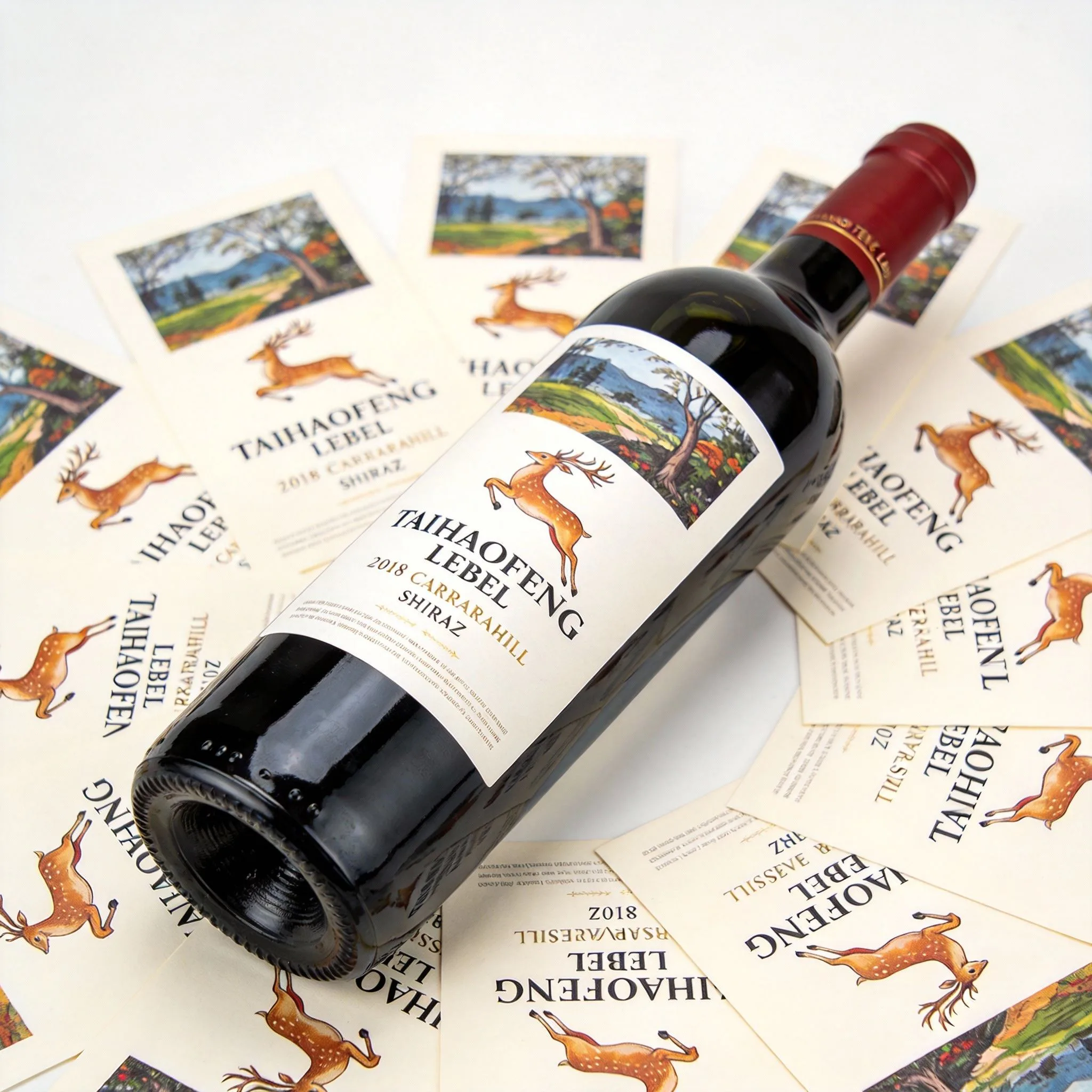
For dry shelf wine labels, premium paper or textured paper can work well. For ice bucket use, condensation, wet service or heavy handling, review wet-strength paper, BOPP, PET or laminated options with a compatible adhesive before approving bulk production.
Wine label material comparison
| Material direction | Best use | Watch-outs |
|---|---|---|
| Textured paper | Premium dry shelf wine, gift bottles and craft positioning. | Ordinary paper may absorb water or wrinkle in wet service. |
| Wet-strength paper | Wine labels that need a paper feel with better wet handling. | Still needs adhesive and finish testing on the real bottle. |
| White BOPP | Wet handling, chilled bottles, strong color and durable label sets. | May feel less traditional than textured paper unless design is adjusted. |
| Clear BOPP | Minimal labels, clear bottles and modern no-label looks. | Small text and barcode areas may need white ink or a white panel. |
| PET film | Durable premium film direction for wet or high-handling projects. | Confirm finish, adhesive and bottle curve before proof approval. |
| Laminated paper | Paper look with added surface protection. | Edges can still be a weak point in prolonged water exposure. |
Ice bucket labels need a different test
Ice bucket use adds water contact, low temperature, rubbing and repeated handling. A standard dry-shelf test is not enough. If the bottle may be chilled in water or ice, test edge lift, paper swelling, ink rub, adhesive slip and label opacity after wet handling.
- Apply the label to the actual bottle shape and glass surface.
- Let the adhesive settle before cold or wet testing.
- Refrigerate the bottle, then check condensation performance.
- Place the bottle in an ice bucket if that matches real service.
- Wipe the bottle and check ink rub, edge lift and paper swelling.
- Scan any barcode or QR code after the wet test.
Premium finishes and wet handling
Foil stamping, embossing, matte varnish, gloss varnish and textured paper can all improve shelf appeal. They also change how the label handles light, rubbing and moisture. A premium finish should be reviewed together with the base material instead of treated as a final decoration added after material selection.
Do not ignore the back label
The front label sells the bottle, but the back label often carries barcode, importer information, warnings, origin, alcohol statement and product details. If the back label is crowded or too small, compliance review and barcode scanning become harder.
For U.S. wine packaging, TTB guidance is the official starting point for label approval and mandatory information. A label printer can prepare clean artwork and production files, but the final approval path belongs to the responsible producer, importer or compliance advisor.
What to send for a wine label quote
- Bottle photo, bottle size and glass color.
- Front label, back label, neck label or seal label size.
- Serving environment: dry shelf, cellar, refrigeration, ice bucket or gift pack.
- Material preference: textured paper, wet-strength paper, white BOPP, clear BOPP or PET.
- Finish preference: matte, gloss, foil, embossing or spot varnish.
- Artwork file and any barcode, QR code or mandatory information block.
FAQ
Is paper or film better for wine labels?
Paper is better for a traditional premium look on dry shelf bottles. Film is often better for wet handling, chilled service and labels that need stronger resistance to moisture.
Can one wine label work for dry shelf and ice bucket use?
Sometimes, but it should be tested under both conditions. If ice bucket use matters, mention it before proofing so material and adhesive can be reviewed together.
Should wine bottles use front and back labels?
Many wine projects use a premium front label and a more information-heavy back label. This keeps the front clean while giving room for barcode, importer details and required statements.
Continue with Wine Bottle Neck Labels: Fit, Placement and Material Choices for a focused purchase checklist.
Continue with U.S. Wine Back Labels: Reserve Space Before the Compliance Proof for a focused purchase checklist.
Continue with PET vs Glass Wine Bottle Labels: Can You Reuse the Same Stock? for a focused purchase checklist.