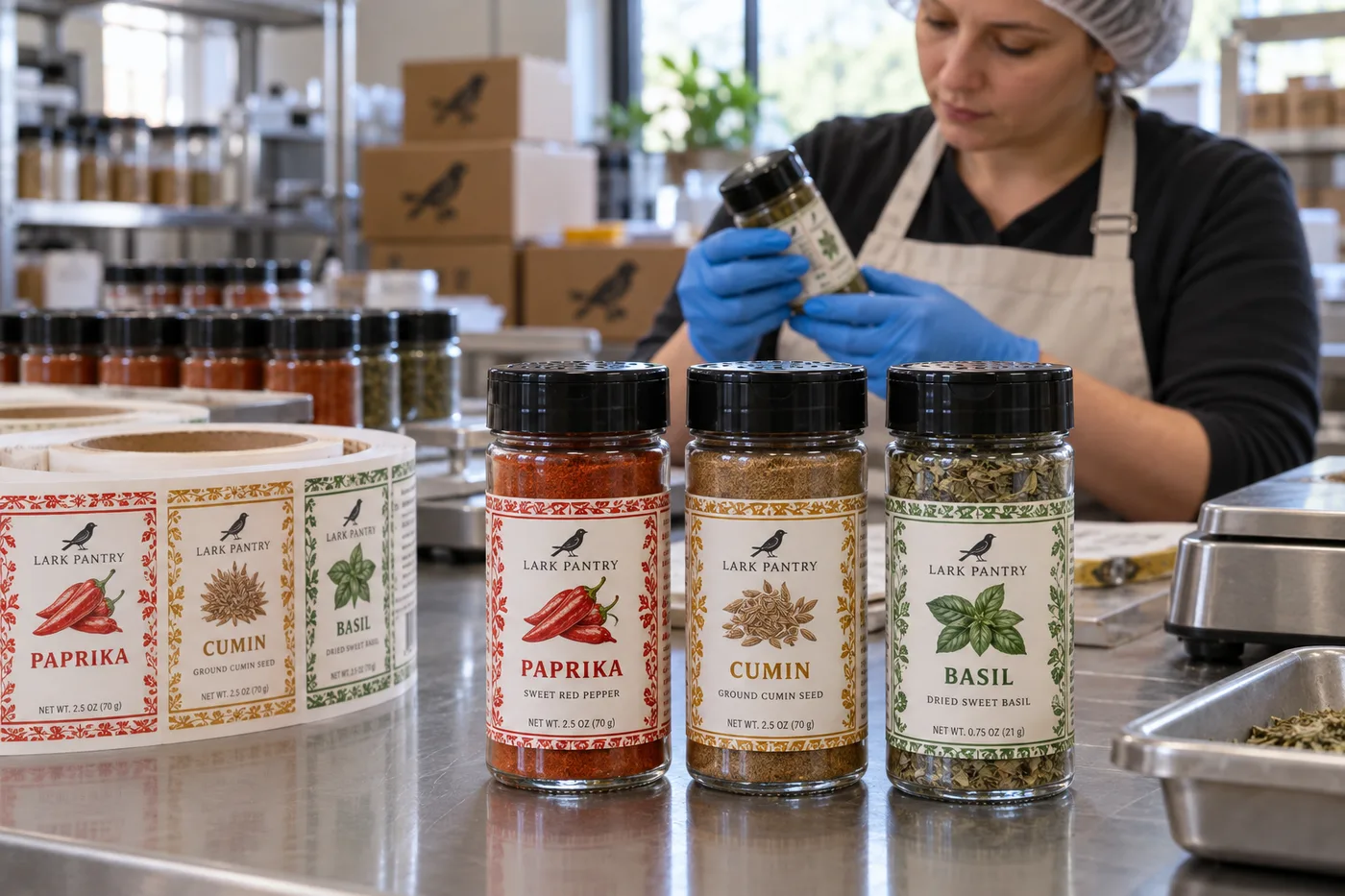
The label family needs a stronger anchor than color
I have seen a spice range where every jar looked polished in a presentation deck, but the tiny flavor names were difficult to distinguish at the filling table. That is an avoidable purchasing problem. My preferred first move is a large, consistent product-name position, with color and illustration as supporting cues. The line should not have to rely on red versus orange alone.
HERMA's spice-label guidance notes the variety of spice packaging substrates and the kitchen exposure to oil, moisture and handling. The right finish depends on the actual container and use, not on the category name.
Two packers with different constraints
Imagine a composite small seasoning maker packing paprika, cumin and basil by hand. It can use one jar and one label size for all three, but the first-off check should compare the printed name with the ingredient in the hopper and the cap style. A simple labeled tray for each flavor may matter more than a premium spot varnish.
A composite private-label co-packer runs many retailer variants on a labeling machine. Here I would ask for a controlled SKU matrix: retailer, product name, artwork revision, barcode file, roll quantity and production order. A wrong-roll changeover is more expensive than a slightly higher unit-label price.
Fit the label below the shaker cap
Measure the straight jar wall, not the outside of the cap. Leave room for the shrink band or tamper feature if one exists. On very small curved jars, label flexibility and adhesive matter; HERMA explains the increased demands of tight radii. Trial the final printed construction around the actual bottle before making a family-wide die.
| Control | What the packer should verify |
|---|---|
| Product name | Readable on the filled shaker |
| Variant cue | Distinct without depending on color alone |
| Lot/date zone | Compatible with the chosen coding process |
| Wrap ends | Flat after normal kitchen handling |
| Roll identity | SKU and revision matched before changeover |
Separate durability from information approval
A durable film or protective finish may suit a jar handled near cooking oil, but it will not correct an incorrect ingredient statement. The food business owns the regulated copy, allergens and actual batch coding. Ask the label printer to proof the supplied text and print position, not to infer ingredients from a flavor name.
Our buying view
Spend a minute at changeover
I would rather make the product name larger and add a clear roll identifier than sell a fancier label that packs the wrong spice. One shared dieline can save setup, but only when the jar, artwork revisions and line checks really are shared.
Send a useful spice-label RFQ
- Real jars, shaker caps and any tamper bands.
- SKU matrix with approved product names and artwork revisions.
- Application method, lot/date printer and printable zone.
- Expected handling, moisture and oil exposure.
- Roll sequence, quantities and changeover sign-off owner.
For roll planning, see multi-SKU short runs. If dates are added later, read preprinted labels with thermal-transfer overprint.
Frequently asked questions
Can one label size cover every spice?
Only if every jar has the same usable panel and closure geometry. Test representative containers before standardizing.
Should each flavor use a separate color?
Color can help, but the product name and controlled SKU code must remain legible independently of color.
Can we add dates later?
Yes, when the final face and finish work with the actual overprint method. Reserve and test a printable zone.
Related buyer guides
Review your label specification
Send package photos, label dimensions, material details, quantity and application conditions. Include good and failed samples where possible so the discussion starts with evidence.