Short answer
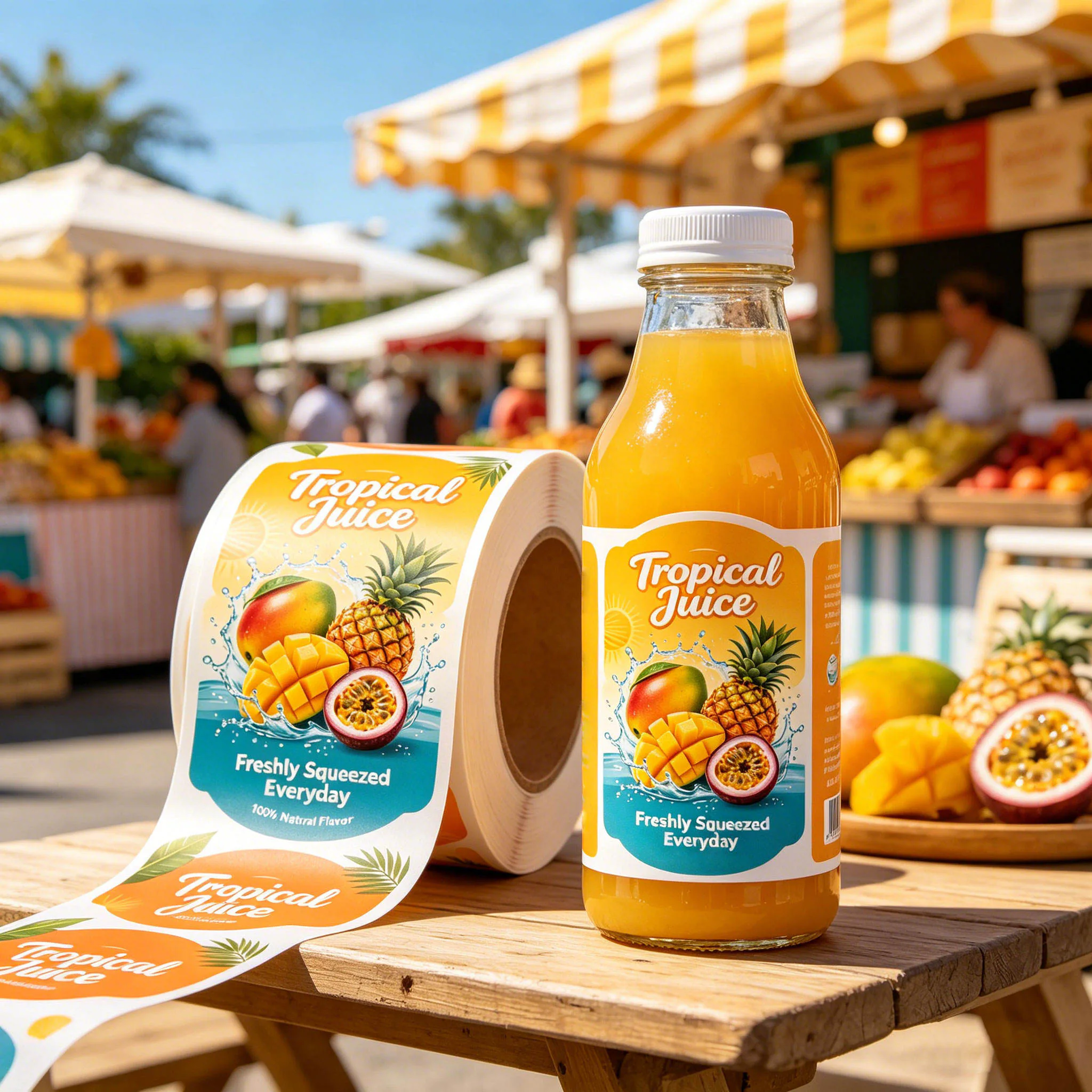
Choose roll labels when labels will be applied repeatedly, used on a dispenser, packed for a production line or ordered in larger quantities. Choose sheet labels when the order is small, application is fully manual, or the labels are for mockups, samples, office use or short tests.
Roll labels vs sheet labels comparison
| Decision point | Roll labels | Sheet labels |
|---|---|---|
| Best for | Production runs, repeated application, bottles, jars, cans, cups and automated or semi-automated workflows. | Small manual batches, sample packs, office labeling, temporary tests and low-speed hand application. |
| Application method | Hand-applied from roll, label dispenser, semi-auto labeler or production machine. | Hand-applied from individual sheets. |
| Machine compatibility | Needs roll direction, inside/outside winding, core size, gap and sometimes maximum roll diameter. | Usually not machine-ready for bottle labelers unless converted later. |
| Quantity | Better as quantity grows because handling, packing and application are more efficient. | Useful for very small quantities or when many designs need a few pieces each. |
| Packaging fit | Strong fit for curved bottles, food jars, beverage bottles, cans and roll-fed application. | Useful for flat packaging, envelopes, sample sheets and simple manual use. |
| Custom shapes | Supports round, oval, rectangle, custom die-cut and front/back label sets. | Also supports custom shapes, but layout depends on sheet size and kiss-cut spacing. |
When roll labels are the better choice
Roll labels are the safer choice for most custom food, beverage and wine packaging projects because they match how labels are used in production. They can be packed by roll, applied faster, and prepared with the roll direction needed by dispensers or labeling machines.
- Bottle labels for juice, soda, water, wine, spirits and chilled drinks.
- Jar labels for sauces, honey, jam, spices, condiments and pantry products.
- Can labels and wraparound labels that need consistent position.
- Food container labels used repeatedly in meal prep, takeaway or deli packaging.
- Orders that may scale from 100 pcs to 1,000 pcs, 5,000 pcs or higher.
When sheet labels make sense
Sheet labels still have a place. They are simple to store, easy to hand out, and convenient when a brand needs a few labels for a sample kit, photo shoot, handmade packaging test or office workflow. They are less ideal when speed, roll direction or machine compatibility matters.
What buyers should send for a roll label quote
Roll direction matters more than many buyers expect
If labels are going into a dispenser or labeling machine, the artwork orientation on the roll must match the machine feed direction. A beautiful label can still be wrong if it arrives wound the opposite way. Before bulk production, confirm whether the label should be top-first, bottom-first, left-first or right-first, and whether labels should be wound inside or outside.
Material choice is separate from format choice
Roll and sheet are production formats. Material is a different decision. A roll label can be paper, clear BOPP, white BOPP, PET, foil paper or textured paper. A sheet label can use many of the same face materials. For refrigerated food, chilled beverages, wet bottles or oily sauces, review moisture-resistant film or laminated options before approving artwork.
FAQ
Are roll labels more expensive than sheet labels?
It depends on quantity, material, shape and finish. At very small quantities, sheet labels may feel simpler. For repeated packaging work, roll labels often become more efficient because application and packing are easier.
Can I start with sheet labels and move to roll labels later?
Yes. Keep the approved label size and artwork file, then confirm roll direction, gap, core size and machine requirements when you move into roll production.
Which format should I choose for a bottle label?
For beverage bottles, sauce bottles, wine bottles and jars, roll labels are usually the better production format, especially if labels will be applied often or by machine.
Continue with Linerless vs Die-Cut Labels for Takeaway Food: A Buyer Guide for a focused purchase checklist.