The revised label is ready, but the warehouse still holds the previous version. Buying another full run could create two inventories that compete for the same packing slots. Using every old label first might also conflict with the reason the artwork changed.
Decide the stock disposition and transition boundary before placing the next order. Start with the change itself, then map the physical labels and finished products affected. A new PDF does not tell the warehouse whether earlier material can still be used.
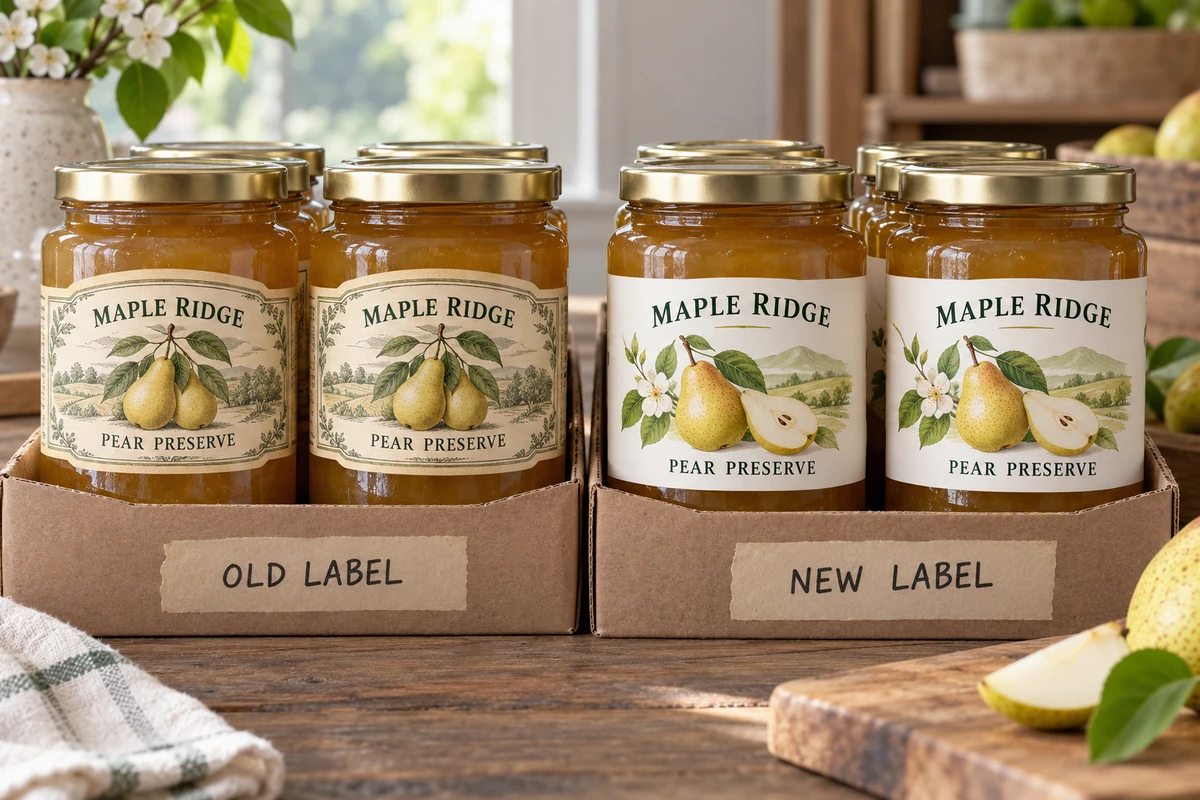
Identify the reason for the change
A decorative refresh, a new container, a changed ingredient statement and a corrected product identifier do not create the same transition problem. Ask the responsible brand, technical and regulatory owners to classify the change and state which uses remain authorized. This purchasing article does not determine whether any particular old label is legally usable.
Record the approved new revision and the version it replaces. If the change affects several components, identify the full set. A new front design may still pair with an existing back label, or it may require a matched replacement. Do not assume either answer from the filenames.
The multi-SKU change guide traces which files are affected. The inventory task goes further: locate the printed stock, assign its status and connect it to the packing schedule.
Count stock at every location
Include the printer, your warehouse, co-packers, sample room and any other place holding usable or partly used rolls. Separate labels that are ordered but not printed from labels already finished. A supplier may be able to amend an unprinted balance while a completed balance needs another decision.
Keep quantities by artwork revision and component. Identify partial rolls and stock whose condition or count remains uncertain. An accounting balance can be a starting point, but it is not proof that the physical labels exist, remain usable or match the current package.
Also ask whether finished product already carries the earlier label. Label stock and finished-product disposition are different decisions. They may share a transition plan, but one cannot be inferred from the other.
Build a stock-disposition register
| Field | Information to record |
|---|---|
| Change reference | Reason, authorized revision and responsible owner |
| Stock identity | SKU, component, artwork version and construction |
| Location | Printer, warehouse, co-packer or other holder |
| Quantity state | Confirmed balance, estimate or recount required |
| Permission | Use, hold, rework or dispose as specifically authorized |
| Cutoff boundary | Relevant product, run, event or date with its basis |
| New-order need | Required quantity after permitted existing stock is allocated |
| Evidence of action | Transfer, consumption, rework or disposal record |
The register records decisions; it does not authorize them. Keep approval with the person responsible for the underlying change. Purchasing can then order from a defensible quantity rather than guess how much old stock will disappear.
Compare the transition routes
Where permitted by the actual change, a controlled runout can reduce waste. Allocate the earlier labels to identified products and packing runs, then start the new version at a defined boundary. This route needs demand, suitable stock and a clear ability to keep versions apart.
A hard cutoff can simplify identity control, particularly when the earlier version must no longer be used. It may leave unused material and create a more urgent replenishment requirement. The business should recognize that cost instead of hiding old stock in an available balance.
Rework is another possible route, but it needs its own approved method and finished-package review. Applying a correction label does not automatically resolve readability, adhesion, mandatory wording or traceability. Use the blockout rework guide for that separate release question.
Order against the permitted demand
Calculate the next requirement by SKU and component. Subtract only the existing quantity actually authorized and allocated for that use. Do not subtract held labels simply because they are physically present. Equally, do not order every component again if a responsible review confirms that some remain valid and compatible.
Use a demand range where forecasts are uncertain. For a hypothetical seasonal beverage, a smaller first release may limit surplus while the design is settling. A stable repeat item may justify a larger order. Ask the supplier for actual options and compare the resulting commitments; do not assume that a larger run always creates a saving.
The can-decoration inventory guide discusses a related commitment choice. Here the asset is the version-specific balance that prevents a new order from quietly duplicating obsolete inventory.
Put the transition instruction where operators need it
Tell each stock holder which version is released for the next run and which is held. Use recognizable roll and carton identities. A message sent only to the designer does not change the material waiting beside the applicator.
Reconcile labels issued, consumed, returned and held at the transition. If a partially used old roll returns from production, ensure it cannot be picked as unrestricted current stock. Record the location and authorized next action rather than rely on an operator remembering which shade of red belonged to the earlier artwork.
The vintage changeover guide addresses clearance at the line. The stock plan covers the wider inventory and purchasing boundary before and after that event.
Close the old version deliberately
After transition, confirm what remains at every location. Record the authorized disposition, supporting quantity and completion evidence. Retain the artwork history and representative records needed by the business even when the physical stock is removed.
Discuss a label-version transition with the old and new revision references, confirmed stock by location, permitted uses and the next packing requirement. Mark unresolved disposition questions clearly. The form opens an email draft; attach the register through your email or the listed WhatsApp channel after reviewing it.