Separate artwork approval from roll control
A vintage update may look like one changed numeral in the PDF. In the bottling room it becomes a new roll, a new carton of labels and a chance for an old roll to be loaded by habit. My first question would be who owns line clearance: the brand, the bottler or the label supplier? A proof signed by marketing does not remove obsolete rolls from beside the machine.
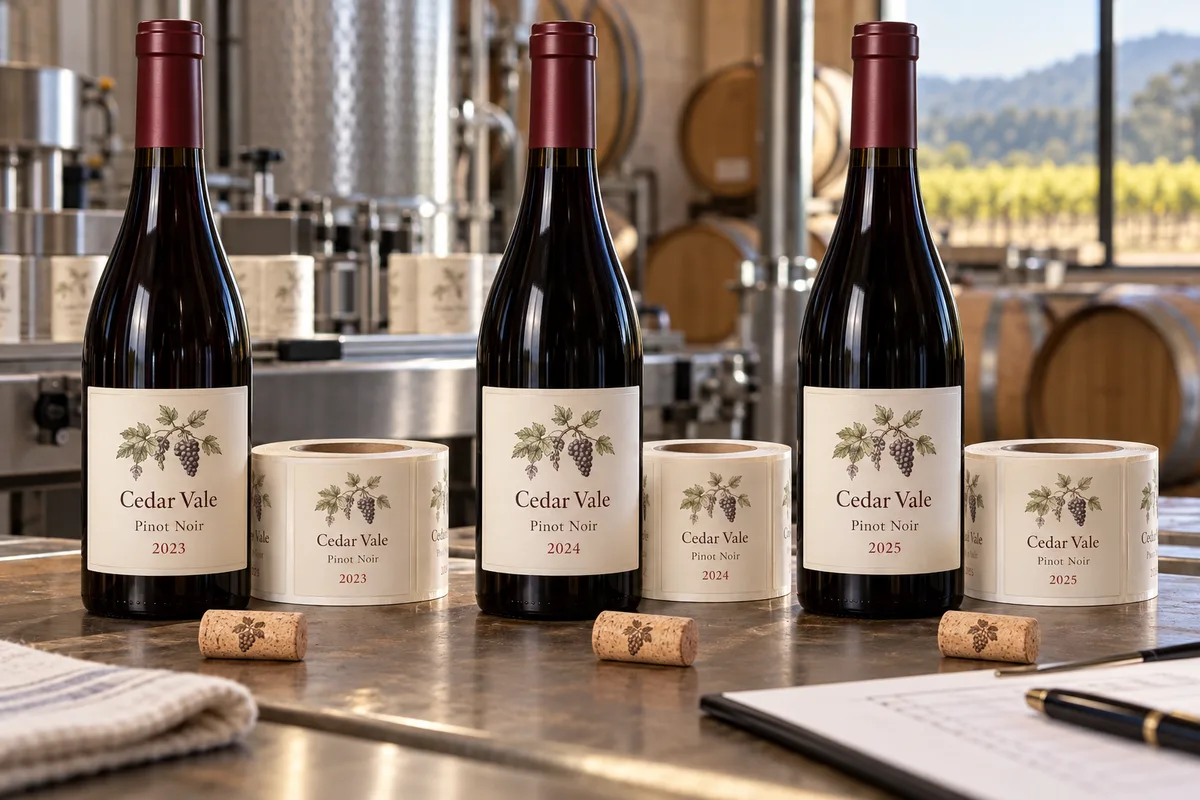
Consider a composite winery with a 2024 and a 2025 Pinot Noir bottled on adjacent days. The bottle, front design and back layout look almost identical. The easiest human error is to assume the reel on the bench is current. I would make vintage prominent on the roll carton, reel tag and job traveler, then count remaining 2024 stock before the first 2025 pallet is staged.
Know what may change in an approved label
For U.S. wine, TTB's wine FAQ gives an example in which changing only a vintage date on an otherwise identical non-organic approved label can be an allowable revision; other changes, including appellation or varietal, may require new approval. That is not permission to change every wine label without review. The winery or importer should verify its actual approval and destination market.
I would keep the approved artwork version, vintage source file, final proof and print order together. If an unapproved marketing sentence enters the 2025 file while the team focuses on the year, the issue is larger than roll control.
A practical changeover at the applicator
Before the new run, remove the prior vintage rolls, loose labels, carton sleeves and printed setup sheets from the station. Record the new roll identifier and compare the first labeled bottle against the approved proof. Check the back label as well as the front, especially if it carries a lot code or changed distributor detail. Keep one physical first bottle for the batch record.
The fictional Cedar Vale image shows three years and separate rolls so the problem is easy to see. It is an editorial illustration, not a client record or a legally complete wine label. In a real line, a secondary label or coding unit may be where the mismatch hides.
Order quantity with residual stock in mind
A large order can lower unit label cost, but leftover year-specific rolls become obsolete at the next vintage. I would compare the apparent price saving with storage, changeover risk and scrap. For a smaller winery, a shorter run may be the cheaper decision in total. If the brand sells a non-vintage cuvée alongside vintage wine, do not group those art files simply because the bottle shape matches.
Send the current approved artwork, exact changes, run quantity by vintage, bottling calendar, front/back roll requirements, roll-direction specification and whether variable data is applied on the line. The useful supplier discussion is about how the labels will be identified and consumed, not only how quickly they can be printed.
Our buying view
What we would decide first
Treat each vintage as an inventory and line-clearance decision, not just a changed numeral. A short trial on the actual pack can settle that question before a full printed roll is ordered.
Related buyer guides
Frequently asked questions
Can I change only the wine vintage without a new U.S. approval?
TTB lists some vintage-date changes as allowable revisions for qualifying approved labels; the winery should check its exact label and market.
Why not print a large stock of vintage labels?
Unused year-specific rolls can become obsolete and increase wrong-roll risk. Compare total cost, not only unit price.
Review your label specification
Send the real package, dimensions, order quantity, labeling stage, storage conditions and artwork. We can discuss a practical material and proof route.