Two roll proposals use the same rectangular artwork and material. One has labels cut next to one another; the other has defined spaces between die-cut labels. The buyer sees a small layout difference, while the applicator may see a different detection and dispensing job.
Choose the web format with the converter and equipment owner. Confirm how each label is separated, detected and presented for application. A visually efficient web layout is not automatically a compatible machine supply.
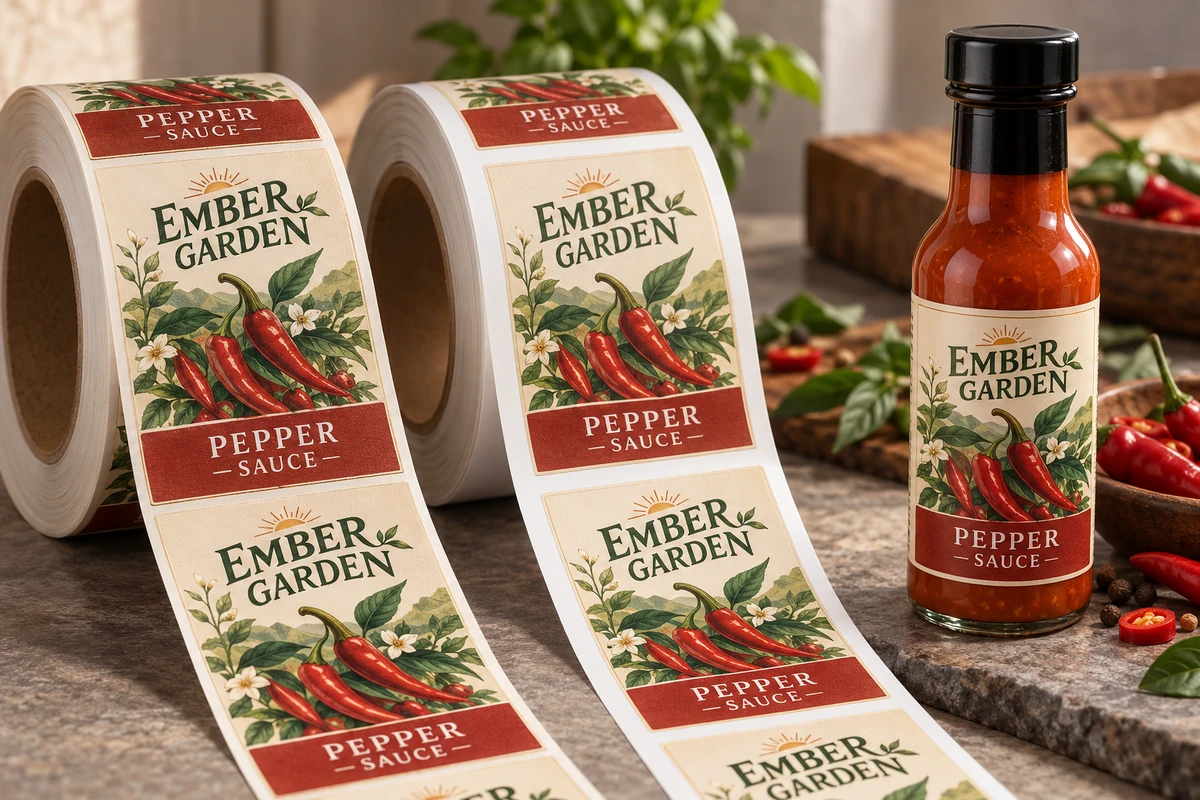
Describe the proposed format precisely
Butt-cut commonly describes adjacent label repeats separated by cuts rather than the same surrounding stripped matrix used for a spaced die-cut layout. Ask the supplier to show its actual construction and drawing, because terminology alone can hide differences in liner, cuts and retained waste.
For a gapped layout, identify the label dimensions, pitch, gap and any edge matrix arrangement. Keep cut footprint separate from repeat distance. Two labels can have the same width and height while their repeat positions differ.
The custom-shape guide addresses the cut boundary. This format decision asks what the delivered web looks like and whether the application process can use it.
Ask how the station finds the next label
Identify the sensor type and detection path with the equipment owner. Some workflows detect a relevant gap or mark; others use another supported method. Do not assume a machine can recognize every butt cut, transparent edge or artwork feature without a trial or applicable equipment confirmation.
The clear-label sensor guide explains why a validated path must represent the actual SKU artwork. Keep the web-format drawing and any registration mark in that same review.
If labels are hand applied, machine detection may not be the controlling issue. The decision may instead concern ease of separating the label, handling the web and keeping the adhesive untouched. A format that is awkward on one automatic line could still have a useful manual application role.
Use a web-format comparison sheet
| Requirement | Butt-cut proposal | Gapped die-cut proposal |
|---|---|---|
| Physical arrangement | Actual cut, liner and retained material | Label, gap, pitch and matrix drawing |
| Detection | Supported method and relevant path | Supported method and relevant path |
| Separation | How the label leaves the liner | How the label leaves the liner |
| Equipment scope | Named station or manual method | Named station or manual method |
| Converting limits | Supplier review of the selected construction | Supplier review of shape and waste removal |
| Quantity basis | Usable repeats and non-product web | Usable labels and non-product web |
| Approval evidence | Representative loading/application result | Representative loading/application result |
The sheet deliberately leaves the winner open. Use the actual offered construction and process rather than assign a universal ranking by format name.
Check conversion and dispensing as different stages
A converter needs to make the selected format reliably. The application line then needs to separate and place the label. A successful cutting sample does not establish the second stage, and a line preference does not prove that every material can be converted into that arrangement.
An Avery Dennison technical bulletin for specific aggressive adhesive products illustrates that converting recommendations can be construction-specific. Its advice is not a general approval for food-label stock or every butt-cut job.
Ask the chosen supplier to review its own material and process. Avoid copying a format recommendation from a different adhesive system merely because the finished label shape looks similar.
Trial the interface the purchase will deliver
Use a representative roll with the proposed liner, cuts, gaps or marks and winding configuration. Confirm core and diameter requirements as well. A loose sample cannot show the full web-handling interface.
Observe the relevant operating conditions under the machine owner's approved procedure. Identify the first and last usable labels, any joins and normal restart behavior where these matter. Record the actual settings and exceptions without presenting one successful short run as proof at every speed.
The release-report guide helps interpret liner-release information. A release value alone does not settle whether the physical format will dispense correctly on a particular station.
Compare cost on the same usable output
Ask for the actual quotation for each acceptable format. Material use, cutting, waste handling, finishing and application labor can change the commercial result. Do not assume that reducing visible gaps produces a particular percentage saving or that a more complex cut always costs more for every process.
Keep the quantity denominator consistent. If one proposal requires additional loading consumption or manual separation work, show that consequence separately. A lower price per printed repeat may not be a lower cost per usable applied label.
For a hypothetical sauce launch, manual application might support one proposal while a later automatic run requires a different format. Record that boundary so the launch sample is not mistaken for approval of the future line.
Show both physical and printed boundaries
Have the web drawing distinguish the cut edge from the printed border and any unprinted margin. A white band in a proof may be artwork rather than a physical gap. Confirm the actual repeat pitch and detection feature in the delivered construction so the equipment owner is reviewing the same object the converter intends to supply.
Put the accepted web drawing on the order
Name the approved drawing revision, detection method and station scope. Confirm how the supplier will identify the format on the packing documentation. When artwork, liner or equipment changes, review the relevant interface again.
Discuss a butt-cut or gapped-label proposal with the label dimensions, intended application method, machine requirements and the supplier's proposed web drawing. Mark any unknown detection condition. The form opens an email draft; review the brief and attach the drawing through email or the listed WhatsApp route.