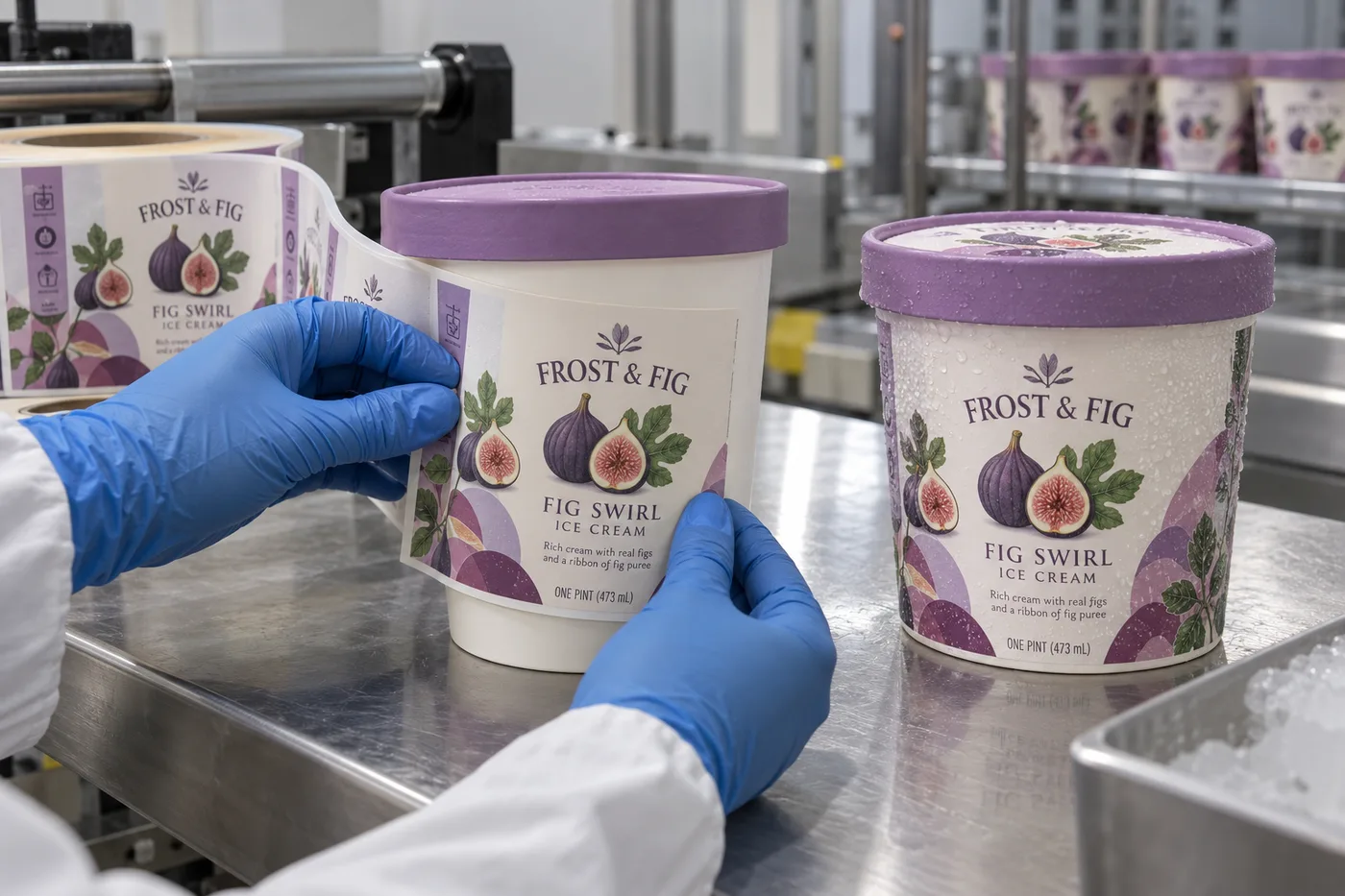
The temperature on the roll is not the temperature on the tub
When an ice cream buyer asks me for a “freezer label,” my first question is whether the pint is labeled before or after it enters the freezer. That distinction determines the starting surface. A dry paperboard tub at the packing station and a frosty tub pulled from cold storage do not offer the same conditions for initial adhesion.
UPM Raflatac separates label options for applications before and after freezing. I would treat that as a prompt to specify the process, not as a promise that one stock works on every tub. Our picture is a fictional illustration, not a measured adhesion test.
Two makers, two routes through the freezer
Imagine a composite scoop-shop brand filling paperboard pints and applying labels to clean, dry tubs before hardening. It may have more freedom to choose a printed paper look, provided the finished construction remains legible and attached through freezer storage, distribution and shopper handling. I would test finished pints, not loose tubs alone.
A composite co-packer may label finished frozen inventory after flavors are allocated to customers. The tub can carry frost or condensation as it warms. Here I would first ask whether the sequence can change. If not, compare constructions qualified for that application stage on the actual coated board. Buying a stronger adhesive without defining the moisture condition is guessing.
Check the tub, lid and label panel together
Paperboard tubs can have coatings, seams and changing diameter. Measure the usable sidewall below the rolled rim and above the base. Place the label seam away from the tub seam where possible. A beautifully printed wrap that runs into the rim can wrinkle regardless of its freezer rating. Keep the lid artwork and side label consistent so flavors are not mixed during picking.
| Trial question | What to record |
|---|---|
| When is the label applied? | Tub surface and temperature at application |
| Does moisture appear? | Frost or condensation before pressing |
| Does the label stay readable? | Print, scuff and contrast after handling |
| Do edges lift? | Location relative to tub seam and rim |
| Does picking stay accurate? | Flavor code on tub, lid and carton |
Approve a full cold-chain sample
Run the intended print, face, adhesive and finish through the real sequence: fill, label, freeze, box, distribute and brief shopper handling. Keep a control sample from each tub supplier or coating change. If the label peels only after a warm-cold cycle, note that separately from immediate application failure.
Our buying view
Change the sequence before paying for a rescue material
If the operation can label clean tubs before freezing, I would test that path first. When labeling must happen on frozen inventory, the RFQ should say so plainly. It may justify a different construction and line procedure, but the extra cost should solve the actual step that fails.
Send this pint-label brief
- Filled tubs and lids from the current supplier and coating lot.
- Labeling stage, surface temperature and moisture condition.
- Sidewall size, flavor count, print finish and application speed.
- Freezer, transport and shelf-handling conditions.
- Good and failed samples with the time of inspection.
For the underlying distinction, read application versus service temperature. For nearby frozen-food choices, see our frozen vacuum-bag label guide.
Frequently asked questions
Can I apply labels to frozen pints?
Only if the specific label construction is qualified for the real application temperature, surface and moisture conditions. Test on production tubs.
Is freezer-safe the same as cold-application?
No. Survival during frozen storage and initial adhesion at the labeling station are separate requirements.
What should a supplier receive?
Send filled tubs, coating details, application temperature, freezer and distribution conditions, and the labeling sequence.
Related buyer guides
Review your label specification
Send package photos, label dimensions, material details, quantity and application conditions. Include good and failed samples where possible so the discussion starts with evidence.