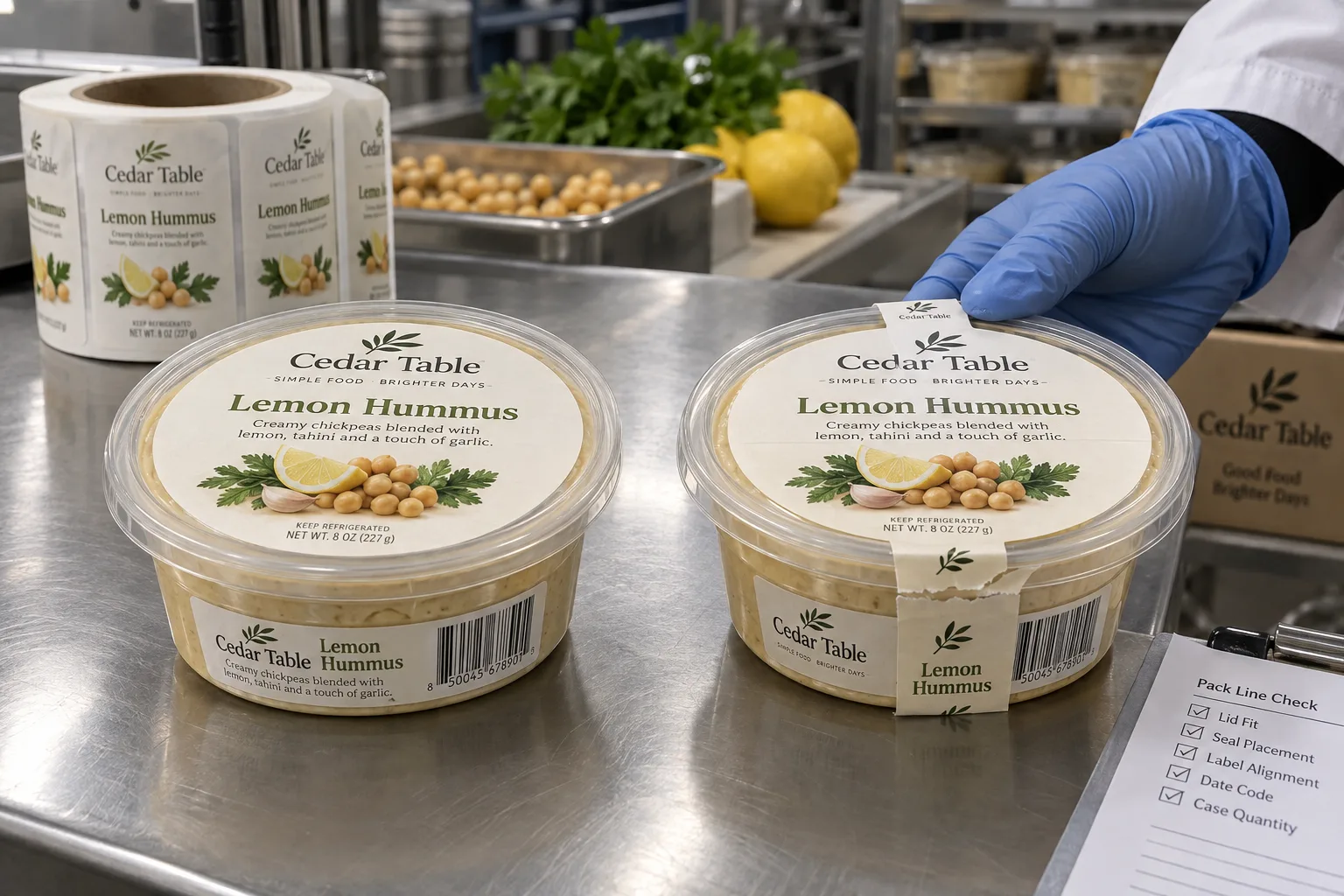
The lid label and the bridge strip do different work
On a chilled dip tub, the lid is the obvious brand surface. A round label can carry the product name, illustration and other approved copy without interfering with opening. But if the brief asks for visible evidence that the lid has been lifted, a lid-only label does not cross the opening. That is where a narrow printed bridge strip may help.
I would be careful with the word tamper-proof. A pressure-sensitive strip can be removed or replaced under some conditions. Its performance depends on the tub plastic, lid shape, adhesive, print and opening method. It is not the tub's primary seal or a substitute for a packaging-risk review. The FDA's consumer guidance encourages checking intact seals and unusual package damage; it does not certify a specific bridge-label design.
Two buyers, one shelf category
Imagine a composite local hummus maker selling from a refrigerated counter. It may need a strong branded lid and already use a separate inner seal approved by its packer. Adding a bridge solely for visual drama could slow packing and create more waste. I would first ask what problem the new strip must solve.
A regional retailer might specifically request a visible lid-opening cue. Then a printed bridge has a reason to exist. I would test whether it tears or leaves obvious evidence as intended, rather than simply checking whether it sticks. The buyer should agree the acceptance method with the packaging and quality teams before ordering thousands of strips.
Make the tub geometry part of the specification
Measure the lid diameter, rim profile and sidewall where the bridge lands. A thick rolled rim can make a flat strip lift at the bend. The strip must not hide the date code, barcode or required product information. If tubs are nested or stacked, confirm that the bridge survives that handling without accidentally opening or peeling.
| Option | Useful when | Check carefully |
|---|---|---|
| Round lid label only | Branding and information are the main need | Readable copy and lid adhesion |
| Separate bridge strip | Visible lid-opening cue is required | Rim fit, deliberate break and application labor |
| Large wrap-over label | One-piece design is worth the handling cost | Wrinkles, lid function and removal evidence |
Test the filled, chilled product
A clean empty tub is a useful artwork mockup, not a complete test. Use filled tubs at the actual packing temperature. Apply labels with the intended hand or machine method, then inspect after chilling, case packing and the expected transit. Open a sample deliberately and document what a shopper would see. Check food-contact and market-specific packaging requirements separately with qualified advisers.
If the strip tears but the main lid label remains, decide whether the result is visually clear enough. If it detaches intact, ask whether shape, surface or adhesive needs changing. A stronger bond is not automatically better if staff cannot apply it consistently or the tub is damaged on opening.
Our buying view
Do not sell a safety promise with a decorative sticker
I like a neatly branded bridge strip; it gives the pack a finished look. But I would not call it a security system from an attractive sample photo. The honest offer is a construction to trial for visible opening evidence on your exact tub, alongside whatever primary closure your packer has approved.
Brief the label supplier and packer together
- Physical lid and tub samples from the intended supplier.
- Whether an inner seal or other closure feature is already present.
- Brand artwork, required copy, date-code and barcode positions.
- Application sequence, chilling and case-packing conditions.
- Agreed opening-evidence and appearance checks.
For general strip and jar-lid choices, see our tamper-seal label guide. For refrigerated adhesive screening, read refrigerated food label materials.
Frequently asked questions
Is a lid-to-side label a primary food seal?
No. It is a label feature that may show opening. The tub, lid and any inner seal must be assessed as the food packaging system.
Can one label do branding and opening evidence?
Sometimes, but the lid rim and sidewall geometry can make one large wrap difficult to apply. Compare a separate narrow bridge with a lid-only label.
What should a buyer test?
Use filled chilled tubs and test closure, application, transport, opening and visible evidence after a deliberate opening attempt.
Related buyer guides
Review your label specification
Send package photos, label dimensions, material details, quantity and application conditions. Include good and failed samples where possible so the discussion starts with evidence.