Start with the consumer action
A ready-meal buyer may ask for a “microwave-safe label” before deciding how the meal is heated. I would stop at the package sequence. Does the shopper remove a paperboard sleeve? Peel a top sticker? Leave the lidding film in place with a vent? Those are different constructions, and the label quote cannot answer the food-safety question on its own.
UPM Raflatac lists temperature-resistant options for heat-and-eat packaging. That establishes available material directions, not a blanket approval for any microwave cycle. FDA advises following the package's cooking instructions, which the food business must validate for its actual meal.
Two meal brands, different design choices
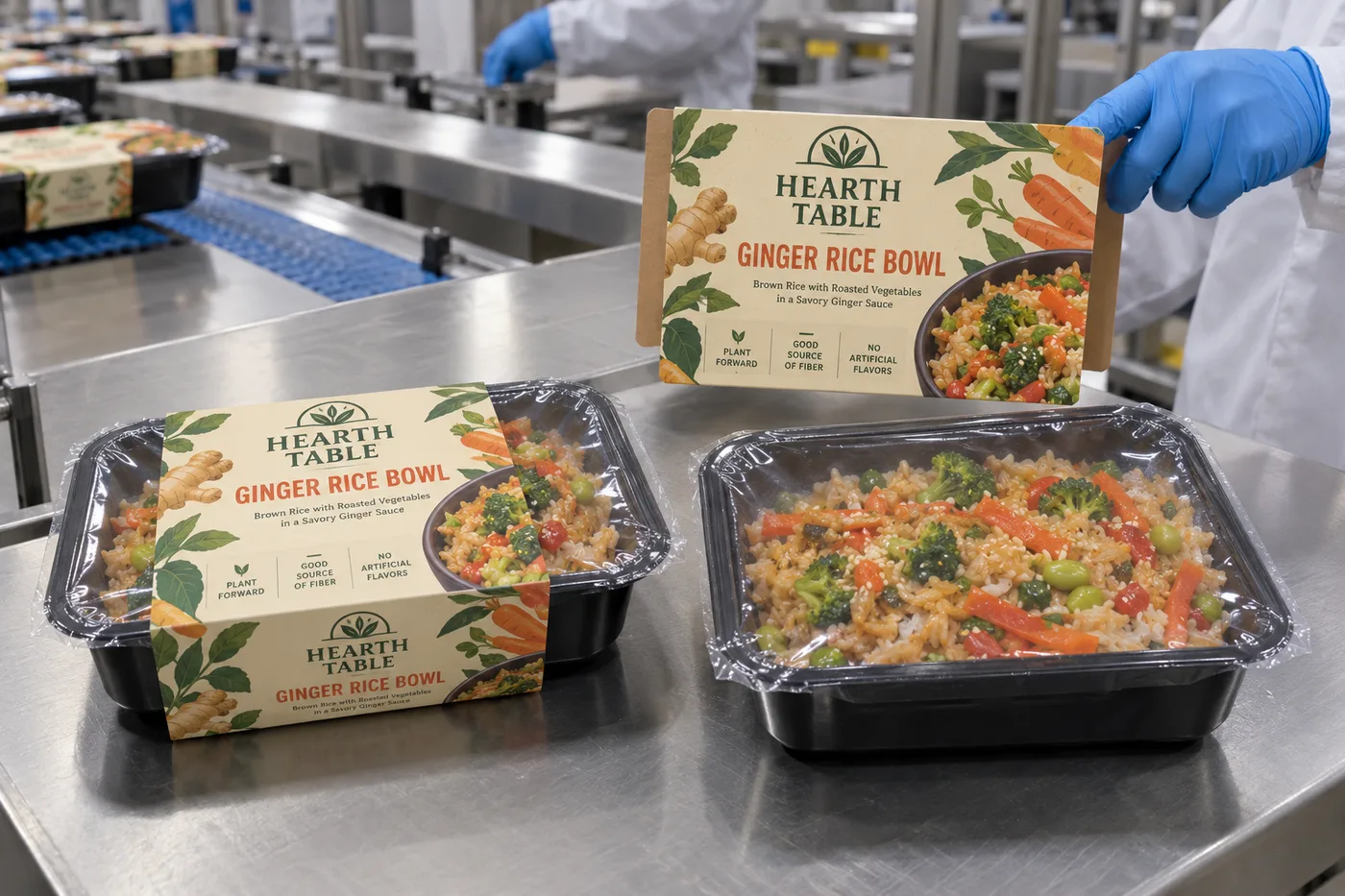
Imagine a composite chilled rice-bowl brand using a removable outer sleeve. The main product label lives on the sleeve, which the consumer takes off before heating. I would make the removal step unmistakable in approved instructions and test that the sleeve slips off without tearing the tray seal. That may preserve more material and print options.
A second composite brand wants a small label to remain on the sealed tray during heating. I would require documented suitability for the complete label construction under the intended heat, time and package conditions, and a real-pack trial. An adhesive marketed as heat-resistant by itself does not validate food contact or the meal's heating performance.
Map every component that enters the oven
Lay out the tray, lidding film, sleeve, peel label and any separate instruction panel. Mark what is removed, pierced or vented. Keep labels away from intended vent points and seals. Confirm the artwork leaves space for validated instructions and required product information. A photo of an attractive meal is useful for the front; it is not evidence that the heating steps are correct.
| Component | Decision before quote |
|---|---|
| Outer sleeve | Removed or retained during heating? |
| Tray label | Any heat exposure, and for how long? |
| Lidding film | Peel, pierce or vent according to validated process? |
| Instruction panel | Visible before and after sleeve removal? |
| Barcode and lot code | Readable through packing and distribution? |
Test the exact meal and package
Trial the printed construction with the filled tray, final lidding film and approved heating directions. Check handling, chilled storage, sleeve removal and the intended heating cycle. The Hearth Table image is a fictional packaging illustration, not proof of heat or food-contact suitability.
Our buying view
Do not buy a heat rating to solve an instruction problem
If the sleeve can come off cleanly and the product instructions support that route, I would price it first. If a label truly must remain, we should specify the whole test condition and documentation before promising the material. The safest-looking spec sheet is not a substitute for a tested pack.
Give the converter this workflow brief
- Physical tray, film, sleeve and finished meal samples.
- Validated heating instructions and component removal sequence.
- Temperature, duration and storage conditions.
- Label surface, print finish, quantity and application method.
- Required package-contact documents and named approval owner.
For copy organization, use our food-label layout guide. If the label is used as a closure, compare tamper-seal label choices.
Frequently asked questions
Can a regular label go into the microwave?
Do not assume it can. Approval depends on the exact tray, label, adhesive, food and heating instructions; obtain appropriate supplier evidence and test the final pack.
Is a removable sleeve simpler?
Often, if instructions clearly require removal and consumers can do so easily. The full package and food-safety instructions still need approval.
Who writes heating directions?
The food business must validate and approve cooking or reheating instructions for its product and package. The label printer should not invent them.
Related buyer guides
Review your label specification
Send package photos, label dimensions, material details, quantity and application conditions. Include good and failed samples where possible so the discussion starts with evidence.